
There exists a massive volume of paper archives accumulated in government agencies, enterprises, institutions, archives and libraries. The prominent pain points include low efficiency of manual page turning, easy damage to original documents during disbinding, insufficient image clarity, excessive manual intervention, and safety risks when scanning rare ancient books and damaged archives.
Traditional flatbed scanners and high-speed sheet-fed devices are only suitable for single-page ordinary documents, failing to meet the digitization requirements of bound files, thread-bound ancient books, brittle aged archives and thick dossiers.
1. Lossless Digitalization Operation: Scanning without disbinding throughout the whole process with low-contact or zero-contact design, effectively avoiding archive tearing, creasing, ink fading and other damages.
2. Graded Capacity Matching: Fully automatic scanning robots handle mass-volume dossiers, while non-contact scanners perform high-precision capture for rare, damaged and special collections. The two types of equipment complement each other in processing capacity.
3. Standardized High-Definition Imaging: Supports high-precision scanning up to 800 DPI with authentic color reproduction consistent with original documents, complying with national archive digitization standard DA/T31.
4. AI-assisted Labor Reduction: Equipped with automatic page turning, intelligent image processing and multilingual OCR recognition to drastically cut manual operations.
5. Compatible & Controllable for Domestic IT Innovation Ecosystem: Both hardware and software are adapted to domestic operating systems and databases, realizing local closed-loop data storage to guarantee information security.
6. Integrated Full-process Workflow: Forms a complete closed-loop workflow covering scanning, image processing, cataloging, archiving, retrieval and backup.
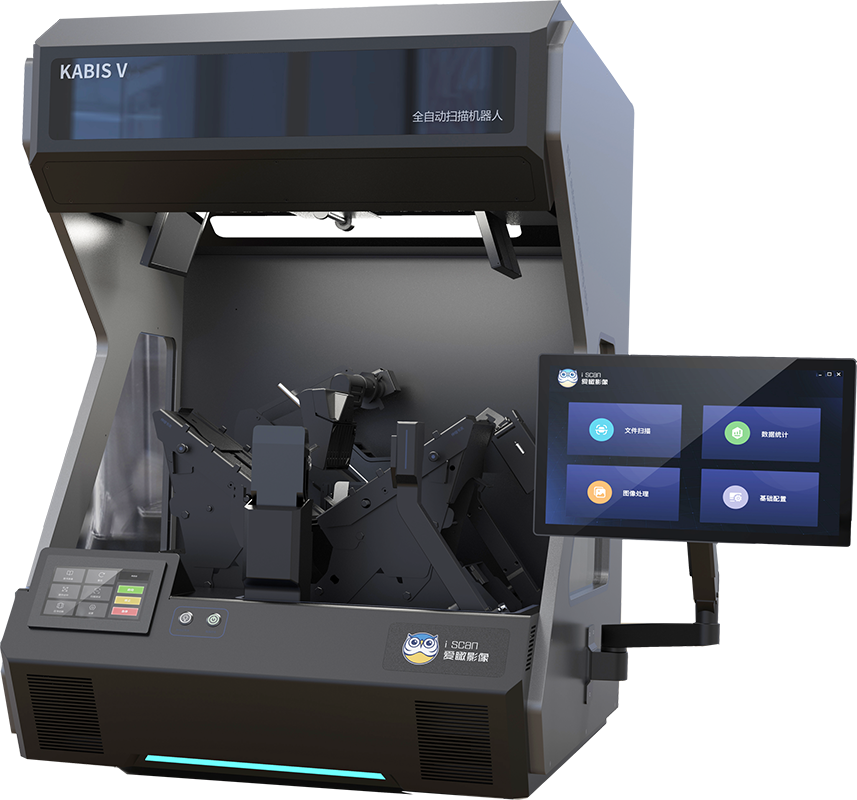
Mass processing centers for administrative documents, personnel dossiers, financial vouchers, litigation files and business archives — KABIS V fully automatic scanning robots.
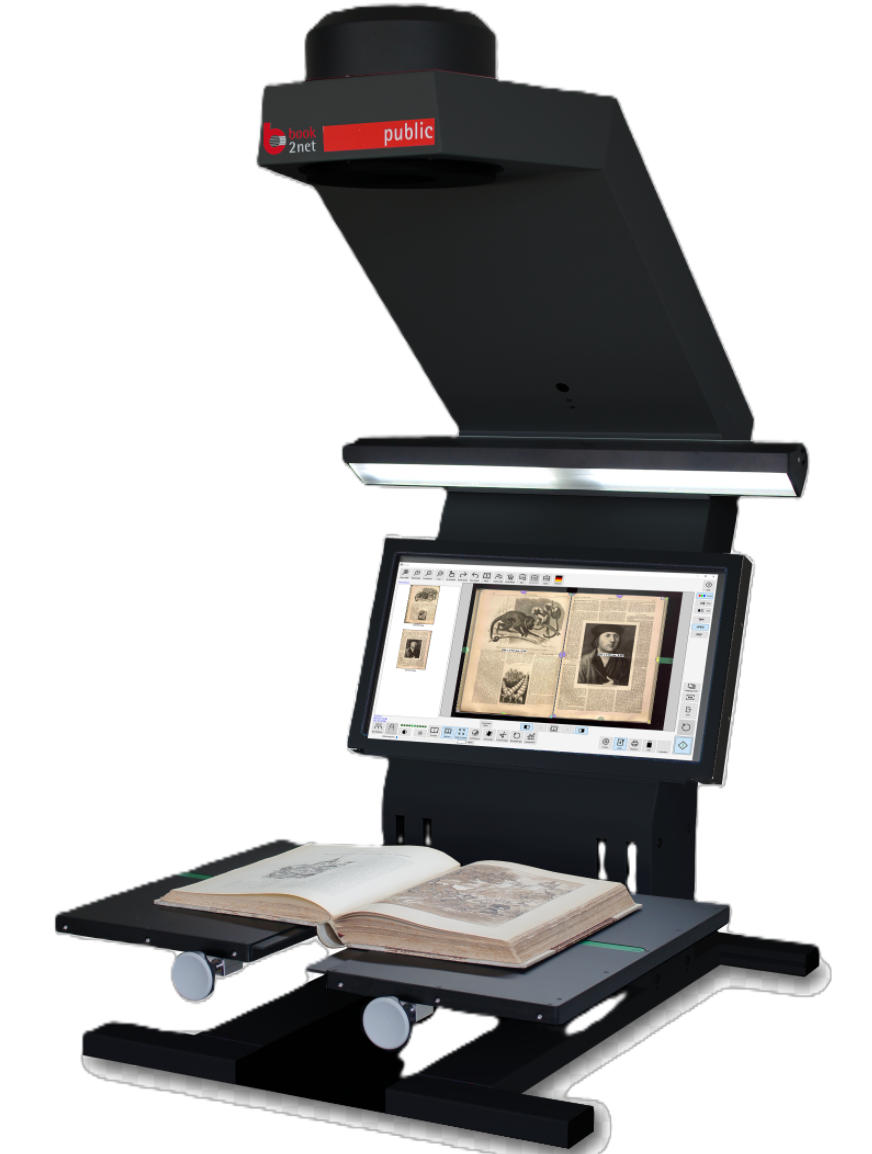
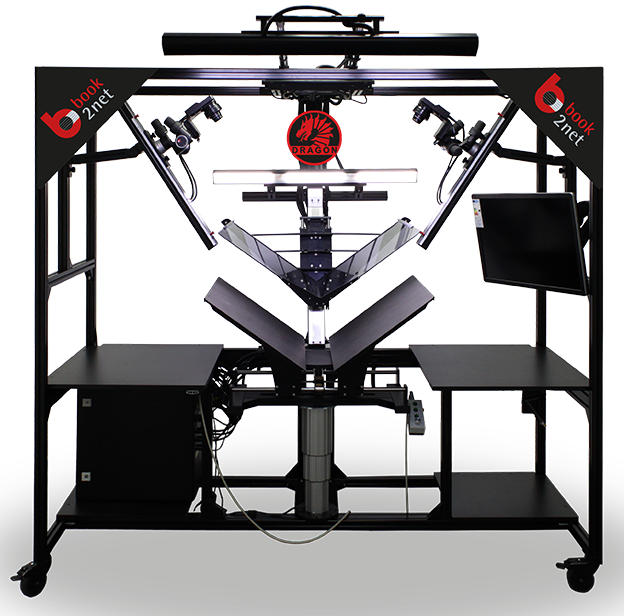
Rare ancient books, Republic of China-era archives, insect-eaten and brittle aged files, thread-bound books, manuscripts, plant specimens and historical cultural relic materials — iS8000 / iS8800 non-contact scanners.
Daily sporadic scanning for small and medium-sized archives, on-site off-site archive digitization and high-precision capture of confidential archives — Combined deployment of both types of equipment.
A single fully automatic robot can process tens of thousands of archive pages per day, replacing the manual scanning work of multiple staff members. Non-contact scanners guarantee high-quality elaborate processing of precious archives. Different categories of archives can be processed in separate parallel workflows, significantly shortening the overall project delivery cycle, making the system ideal for digitization projects involving millions of archived documents.